 | |
|

LISTS Title Index: A-J K-Z Author Index: A-J K-Z What's New? Bestsellers Biblical Personalities Specials  View Cart View CartBROWSE SUBJECTS of INTEREST Archaeology Biblical Studies Dead Sea Scrolls History Reference Religion Travel ABOUT CENTURY ONE About Our Store Help Desk Feedback Safe Shopping Guarantee New Customers Foundation SIGN-UP Keep Me Informed 
Don't miss our Special Features section. Here you will find informative articles, charts and graphs. CENTURY ONE FOUNDATION The Mt. Zion Project The Original Bible Project The Dig at Sepphoris LINKS TO MORE INFORMATION: At the end of each section, you will find links to other Web sites on related topics of interest. If you know of additional sites that you think others might find interesting, please contact us with the information. We'll be happy to check it out. |
 |
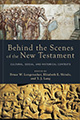 Behind the Scenes of the New Testament: Cultural, Social, and Historical Contexts
This authoritative volume brings together a team of world-class scholars to cover the full range of New Testament backgrounds studies in a concise, up-to-date, and comprehensive manner. Drawing on the expertise of specialists in the areas of archaeological, historical, and biblical studies, this book provides concise treatments of a wide breadth of topics related to the world of the early Christ followers. The book offers compact overviews of key historical issues, facilitating enriched understandings of the significance and force of the texts of the New Testament in their original contexts. Meant to be used alongside traditional literature-based canonical surveys, this one-stop introduction to New Testament backgrounds fills a gap in typical introduction to the Bible courses and is ideal for undergraduate or seminary classes. It is beautifully designed and includes photographs, line drawings, maps, charts, and tables, which will facilitate its use in the classroom. Read More >> 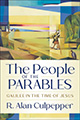 The People of the Parables: Galilee in the Time of Jesus
Drawing from Greco-Roman history, Second-Temple Jewish studies, archaeology, the social world of the New Testament, parable studies, and the burgeoning literature on Galilee, The People of the Parables describes life in first-century Galilee as it was experienced by the characters in Jesus' parables. R. Alan Culpepper assesses both primary literature and recent research on Galilee--including important archaeological discoveries--and fashions a new and insightful social history of Galilee, the people of the parables, and the historical context of Jesus' ministry. Culpepper builds this history by elucidating the lives of first-century Galileans featured in Jesus' parables: children, women, daughters, mothers, widows, fathers, sons, landowners, tenants, day laborers, debtors, farmers, fishermen, shepherds, merchants, travelers, innkeepers, masters, slaves, tax collectors, judges, Pharisees, priests, Levites, Samaritans, bandits, and, finally, Jesus. Who these people were--their place in Galilean society, how they lived, socialized, worshiped, and conducted business; how they were educated--is described in straightforward, nontechnical language. Culpepper brings new meanings to the parables for today's readers by shedding light on the people of Galilee in the time of Jesus. Read More >> 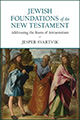 Jewish Foundations of the New Testament: Addressing the Roots of Antisemitism
Jewish Foundations of the New Testament is a scholarly exploration of the deep-rooted connections between Judaism and early Christianity, focusing on the Jewish context of the New Testament. The author delves into the historical, cultural, and theological intersections between the two faiths, addressing the complex relationship that has shaped Christian theology and biblical interpretation over centuries. The book offers strategies for readers seeking to avoid anti-Jewish readings of the New Testament, thereby fostering improved Jewish-Christian relations. Presenting thirty New Testament passages that have historically and adversely influenced Jewish-Christian relations, each chapter discusses various interpretations, emphasizing the need for contextual awareness to avoid perpetuating harmful stereotypes. The book focuses on four key challenges that contribute to anti-Jewish bias in New Testament interpretation: the portrayal of Pharisees, the term "Jews" in the Gospel of John, the role of the Law in Pauline theology, and the notion of the "New Covenant" in the Epistle to the Hebrews. Most powerfully, Svartvik critiques the longstanding theological approach known as supersessionism, or replacement theology, which claims that Christianity has replaced Judaism as the true faith. Svartvik suggests that this framework has led to a misinterpretation of key biblical passages, fueling anti-Jewish rhetoric and contributing to theological triumphalism. Read More >> 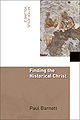 Compellingly Establishes the Identity of Jesus, the Christ, From Historical Sources
In Finding the Historical Christ by Paul Barnett is a calculated reaction against the popular dichotomy between the Jesus of history and the Christ of faith. In Finding the Historical Christ Barnett seeks to establish that the two figures are, in fact, one and the same. The culmination of Barnett's After Jesus trilogy, Finding the Historical Christ carefully examines the ancient sources pertaining to Jesus, including writings by historians hostile to the Christian movement (Josephus, Tacitus, Pliny), the summarized "biographies" of Jesus in the book of Acts, and especially the four canonical Gospels. Based on compelling historical evidence, Barnett maintains that Jesus of Nazareth regarded himself as the prophesied Christ, as did his disciples before Jesus died and rose again. This is the only way to explain the phenomenon of the early church worshiping Jesus. 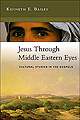 A Kaleidoscopic Study of Jesus Throughout the Four Gospels
In Jesus Through Middle Eastern Eyes: Cultural Studies in the Gospels, Ken Bailey examines the life and ministry of Jesus with attention to the Lord's Prayer, the Beatitudes, Jesus' relationship to women and especially Jesus' parables. Through it all, Bailey employs his trademark expertise as a master of Middle Eastern culture to lead you into a deeper understanding of the person and significance of Jesus within his own cultural context. With a sure but gentle hand, Bailey lifts away the obscuring layers of modern Western interpretation to reveal Jesus in the light of his actual historical and cultural setting.
|
|
| |||||||||||||||||||





 |
|
All prices subject to change and given in U.S. dollars.   |